
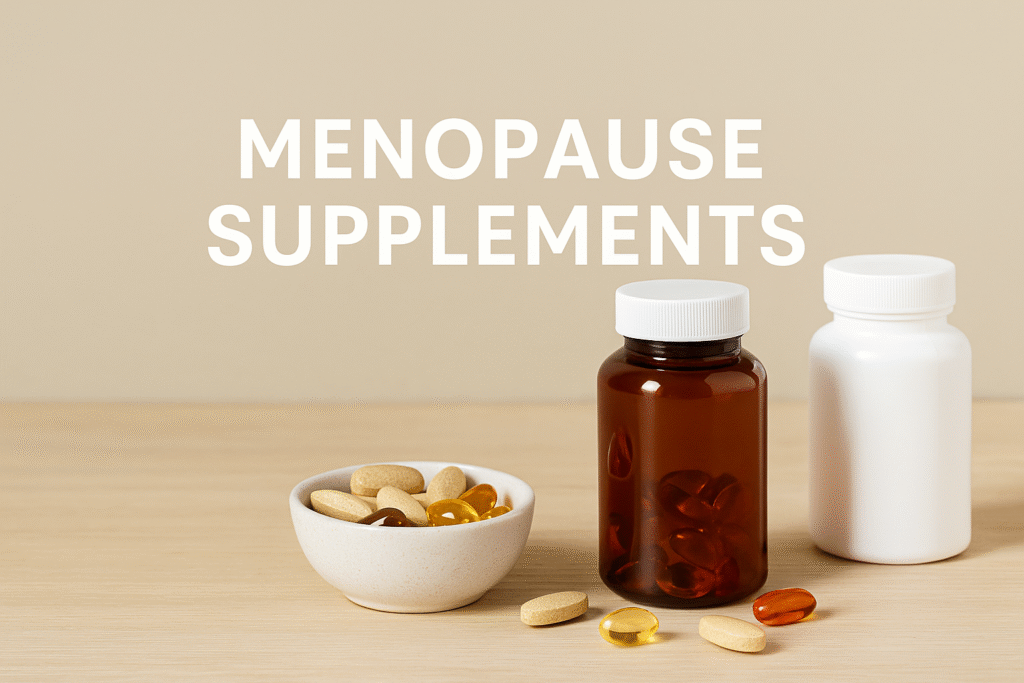
Menopause is a normal stage in every woman’s life. It marks the end of menstrual cycles and a major hormonal change. During this time, oestrogen and progesterone levels drop. These shifts can lead to symptoms such as hot flushes, mood swings, sleep problems, and bone loss.
Many women in the UK turn to supplements for support. But not all products deliver what they promise. This guide explains what menopause supplements do, which ingredients have evidence, and how to choose safely.
What Are Menopause Supplements?
Menopause supplements are products that aim to ease symptoms or support general health during and after menopause. They often contain vitamins, minerals, herbs, or plant-based compounds called phytoestrogens.
Most are available over the counter in pharmacies, supermarkets, or online. They are sold as capsules, tablets, or powders. Some combine multiple ingredients in one blend.
The goal of these supplements is not to replace hormone therapy but to help the body adjust to changing hormone levels.
Common Menopause Symptoms
Understanding symptoms helps you decide what type of support you might need. Common symptoms include:
- Hot flushes and night sweats
- Low mood or anxiety
- Tiredness or poor sleep
- Weight gain or bloating
- Joint stiffness
- Vaginal dryness
- Poor concentration
- Thinning hair and dry skin
Each woman’s experience is unique. Some have few symptoms, while others face daily disruption. Supplements can play a small but useful role for some women.
Vitamins and Minerals for Menopause
Vitamin D
Vitamin D supports bone and immune health. Falling oestrogen can lead to bone loss, so getting enough vitamin D helps maintain strength. In the UK, sunlight is the main source, but it’s limited in autumn and winter. Many women take a daily supplement of 10 micrograms.
Calcium
Calcium works with vitamin D to protect bones. Dairy foods, leafy greens, and fortified plant drinks are good sources. A supplement may help if your diet lacks these foods.
Magnesium
Magnesium supports normal nerve and muscle function. Some women find it helps with sleep and fatigue.
B Vitamins
B6, B12, and folate support energy and nervous system health. They can help maintain balance when stress and tiredness are common.
Zinc and Selenium
Both support hair, skin, and immune function. They are often included in menopause multivitamins for overall wellbeing.
Herbal and Plant-Based Supplements
Many menopause products in the UK contain plant extracts. Some act as phytoestrogens—natural compounds that mimic the effect of oestrogen in the body, but at a much lower level.
Red Clover
Red clover is a source of isoflavones, a type of phytoestrogen. Some studies suggest it may reduce hot flushes, but results vary.
Black Cohosh
Black cohosh is a root extract used for hot flushes and mood symptoms. Some women report improvement, but evidence remains mixed.
Sage
Sage leaf extract may help reduce sweating and hot flushes. It is a common ingredient in natural menopause tablets.
Soy Isoflavones
Soy-based supplements contain phytoestrogens that can act like weak oestrogen in the body. They may help with hot flushes for some women, especially those not taking hormone therapy.
Flaxseed
Flaxseed contains lignans, another type of phytoestrogen. Adding ground flaxseed to food can be a gentle way to increase intake.
Do Menopause Supplements Work?
The results vary. Some women notice improvement in symptoms like flushes, sleep, or mood. Others feel little change.
Scientific studies on supplements often show mixed results. What works for one person may not work for another. This is because hormone levels, diet, lifestyle, and genetics all differ.
Supplements are most effective when combined with healthy habits—balanced eating, regular exercise, enough sleep, and stress management.
How to Choose a Menopause Supplement
With many products on the market, choosing can feel confusing. Here are key points to consider:
- Check the label. Look for clear ingredient lists and dosages. Avoid products that hide blends or use vague terms.
- Focus on evidence. Choose supplements that contain nutrients supported by research, such as vitamin D, calcium, or phytoestrogens.
- Avoid high doses. More is not always better. High levels of vitamins or herbs can cause side effects.
- Look for UK regulation. Choose brands that comply with UK food supplement standards.
- Be wary of bold claims. Supplements should not promise to “cure” or “reverse” menopause symptoms.
- Ask a healthcare professional. If you take HRT or other medication, check for interactions.
Safety and Side Effects
Most supplements are safe when used as directed. Still, natural does not always mean risk-free.
Some herbs can cause stomach upset or headaches. Others can interfere with prescription medicines. For example, St John’s wort affects how the body processes certain drugs.
Always read product information carefully and speak to your GP or pharmacist if you are unsure.
Natural Support Beyond Supplements
Supplements can help fill gaps, but lifestyle plays a major role in managing menopause.
- Eat a balanced diet. Focus on whole foods, fruit, vegetables, lean proteins, and calcium-rich choices.
- Exercise regularly. Weight-bearing and resistance exercises strengthen bones and improve mood.
- Sleep well. Keep a steady routine, reduce caffeine, and maintain a cool bedroom temperature.
- Limit alcohol and smoking. Both can worsen hot flushes and harm bone health.
- Manage stress. Breathing exercises, walking, and mindfulness can help balance mood and hormones.
Small, consistent steps have lasting effects.
The Bottom Line
Menopause supplements can play a useful role, but they are not magic solutions. The most reliable support comes from good nutrition, movement, rest, and medical guidance when needed.
If you choose to use supplements, do so with care and realistic expectations. Focus on quality, safety, and what your body truly needs.
The right approach to menopause combines science, self-awareness, and patience. Supplements can be part of that balance—steady, simple, and effective when chosen wisely.